Ask ten couples what a Punta Cana wedding costs and you will get ten different answers—and most of them will be incomplete. The venue fee is only the beginning. Between catering, bar packages, vendor fees, transportation, legal paperwork, and the small expenses that never make it onto a brochure, the true cost of a destination wedding is usually higher than couples expect, and structured differently than they imagined.
This guide breaks down what a Punta Cana wedding actually costs, category by category—including the hidden and often-overlooked expenses that catch couples off guard. Think of it as the budget conversation most vendors will not have with you until it is too late.
A note on numbers: The figures below are realistic planning ranges, not quotes. Costs vary significantly by season, guest count, venue type, and vendor tier. Always request written estimates—and always confirm what is included.
Why Punta Cana Budgets Confuse Couples
Destination wedding budgets are confusing for three reasons.
First, resort packages create false expectations. Many all-inclusive resorts advertise “free weddings” or packages starting at a few thousand dollars. Those packages are real—but they typically require a minimum number of booked room nights, include only basic ceremony setup and a limited dinner, and exclude photography, florals, entertainment, and anything customized. The package is a starting point, not a total.
Second, vendor pricing in the Dominican Republic is not standardized. Two florists may quote wildly different amounts for what looks like the same arrangement, and the difference often comes down to imported versus local flowers, delivery and setup fees, and whether the quote includes teardown.
Third, the hidden costs are genuinely hidden. Outside-vendor fees, judge travel, translation and apostille costs, guest transportation, and weather contingencies rarely appear in initial quotes. They are not scams—they are real logistical expenses—but they need to be budgeted from day one.
A transparent Punta Cana wedding planner will give you a written, line-item budget that accounts for all of these before you commit to anything.
The Core Budget Categories
1. Venue and Ceremony Fees
Typical range: US $2,000–$15,000+
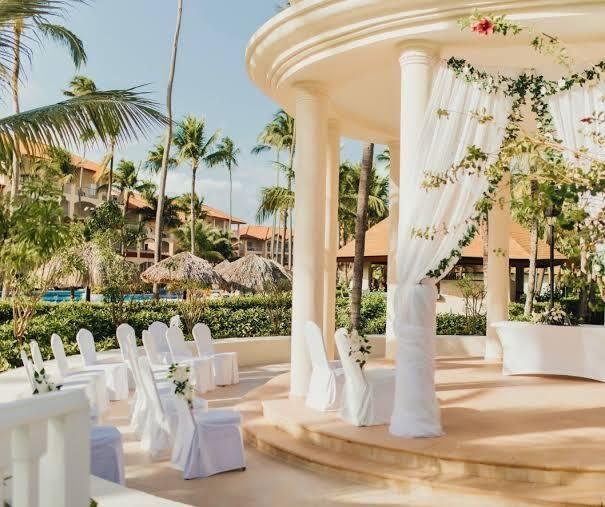
This is where the widest variation exists. An all-inclusive resort wedding package may run a few thousand dollars (often offset by room-night requirements), while a private villa, cliffside property, or exclusive beach club can command significantly more—especially in peak season.
What to confirm: Does the fee include tables, chairs, linens, and basic setup? Is there a food-and-beverage minimum? Is there a rain backup space included, or does that cost extra? Are there restrictions on outside vendors, and what are the associated fees?
2. Catering and Bar
Typical range: US $75–$200+ per guest
Food and beverage is usually the largest single line item in a Punta Cana wedding budget. At an all-inclusive resort, catering is often bundled into the package—but upgrades, premium bar tiers, and additional courses add cost. At off-resort venues, catering is typically priced per person and can climb quickly with plated service and open bar.
What to confirm: Is the bar open, limited, or consumption-based? Are there per-person minimums? Is a late-night snack station included or extra? What are the service charge and tax percentages (these are often added on top and can be substantial)?
Budget-saving note: A smaller guest list with premium food almost always delivers a better experience than a larger guest list with standard catering. And a local late-night street food station is inexpensive per person and consistently a guest favorite.
3. Photography and Videography
Typical range: US $2,500–$8,000+
This is the category where couples most often regret cutting corners. Photography and video are the only elements of your wedding that last beyond the day itself.
What to confirm: How many hours of coverage are included? Is a second shooter included? Is travel and accommodation for the team built into the quote? Is there an outside-vendor fee from the venue? Are edited images and a highlight film included, or sold separately?
Budget-saving note: Bundling photography and videography with one team often reduces total cost and can reduce per-vendor fees at resorts that charge for external vendors.
4. Florals and Décor
Typical range: US $1,500–$8,000+
Florals swing widely depending on whether you use imported blooms or local tropical flowers, and whether your design includes an arch, aisle décor, centerpieces, and reception installations.
What to confirm: Does the quote include delivery, setup, and teardown? Are rental items (arches, furniture, lighting) priced separately? How do local versus imported flowers affect cost and availability?
Budget-saving note: Local flowers—heliconia, anthurium, bird of paradise, orchids, palm fronds—are dramatic, beautiful, and far more affordable than imported roses. They also photograph beautifully in tropical light.
5. Music and Entertainment
Typical range: US $800–$4,000+
A DJ typically costs less than a live band, and both vary by reputation and by whether the event is peak season. Live ceremony musicians (a trio or soloist) are an affordable way to add elegance to the ceremony and cocktail hour.
What to confirm: How many hours are included? Is sound equipment and lighting included? Is there a travel fee? Does the venue have noise restrictions that affect timing?
6. Hair and Makeup
Typical range: US $200–$600+ per person
Beach weddings mean humidity, which means hair and makeup that hold up matter more than usual. Many brides book a trial, and many book services for bridesmaids and family as well.
What to confirm: Is there a minimum spend or minimum number of services? Is travel to your hotel or villa included? Is a trial available, and is it priced separately?
7. Attire and Accessories
Typical range: Highly variable
This category is personal and can range from a few hundred dollars to several thousand, depending on whether you buy, rent, or tailor. Beach-appropriate fabrics—linen, chiffon, tulle—are often less expensive than heavily structured gowns, and they are far more comfortable in tropical heat.
8. Stationery and Signage
Typical range: US $300–$1,500
Save-the-dates, invitations, welcome signage, seating charts, and menu cards. Digital save-the-dates and a wedding website can dramatically reduce printing costs while keeping guests informed.
9. Guest Transportation
Typical range: US $300–$1,500+
If guests are staying at a resort and your venue is off-property, group shuttles are often necessary—and always appreciated. Charter buses or vans are typically priced per vehicle per trip.
What to confirm: How many trips are included? Is there a return trip after the reception ends? What happens if the reception runs late?
10. Favors and Welcome Bags
Typical range: US $10–$40 per guest
Local consumables—Dominican coffee, chocolate, small bottles of rum, artisan crafts—cost less than mass-produced trinkets and are actually taken home. Welcome bags delivered to guest rooms are a lovely touch but should be budgeted per guest.
11. Planning and Coordination Fees
Typical range: US $1,500–$6,000+
This is the category couples most often underestimate—and the one that most affects the quality of everything else. A Punta Cana wedding planner provides venue and vendor recommendations, contract review, budget management, timeline creation, vendor coordination, and on-site day-of management.
What to confirm: What is the fee structure—flat fee, percentage of budget, or hourly? Is the planner independent, or do they take vendor commissions? Exactly how many hours of on-site coordination are included on the wedding day? Is there a written scope of services?
Important context: An independent planner paid by you will recommend vendors based on fit and quality, not on which supplier pays the highest referral fee. This transparency often saves more money than the planning fee itself.
The Hidden Costs That Catch Couples Off Guard
These are the expenses that do not appear in initial quotes—and they are the reason so many destination wedding budgets overrun.
1. Outside-Vendor Fees
Many resorts charge a fee for each external vendor you bring in—often around US $150 per vendor. If you hire an outside photographer, florist, DJ, and hair stylist, that is several hundred dollars before a single service is delivered. Confirm the policy in writing, and bundle services where possible to reduce the count.
2. Legal Ceremony Documentation
If you choose a legal civil ceremony rather than a symbolic one, budget for apostilles, notarization, official Spanish translations, Civil Registry filing fees, and judge travel. In practice, these can add US $540–$800 in unexpected costs beyond the base ceremony fee.
3. Service Charges and Taxes
Quoted prices often exclude service charges and local taxes, which can add a meaningful percentage to catering, bar, and venue costs. Always ask whether a quote is inclusive or exclusive of tax and service.
4. Weather Contingencies
A tent rental, a covered backup space, or a last-minute venue shift for rain all carry costs. In hurricane season, insurance and contingency planning are essential. Build a weather buffer into the budget from the start.
5. Vendor Travel and Accommodation
Vendors traveling from outside the immediate area may charge travel and accommodation fees. This applies to photographers, bands, and even planners if they are based elsewhere.
6. Guest Count Creep
Every additional guest adds catering, bar, seating, favors, welcome bags, and often transportation. Final guest counts rarely come in lower than early estimates. Budget for a 10% buffer in guest count.
7. Overtime and Extra Hours
Photographers, DJs, and transportation are often priced by the hour. Receptions that run long—which good ones do—can trigger overtime fees. Confirm the hourly rate in advance so you can decide in the moment whether to extend.
8. Tips and Gratuities
Gratuities for servers, bartenders, and vendor teams are customary and often not included in quotes. Ask your planner what is customary and build it in.
A Sample Budget Framework
To make this concrete, here is how a mid-size Punta Cana wedding might allocate a US $30,000 total budget. This is illustrative, not a quote—your allocation will depend on your guest count, venue, and priorities.
| Category | Estimated Allocation | Notes |
|---|---|---|
| Venue and ceremony fees | $3,000 | May be offset by resort package or room block |
| Catering and bar | $9,000 | ~75 guests at ~$120 per person, plus service/tax |
| Photography and video | $4,500 | Bundled team, 8 hours coverage |
| Florals and décor | $3,500 | Local tropical flowers, arch, centerpieces |
| Music and entertainment | $1,800 | DJ plus ceremony trio |
| Hair and makeup | $700 | Bride plus two others |
| Attire and accessories | $2,000 | Highly variable |
| Stationery and signage | $600 | Digital save-the-dates, printed signage |
| Guest transportation | $800 | Two shuttle trips |
| Favors and welcome bags | $1,200 | ~$16 per guest |
| Planning and coordination | $3,000 | Independent planner, full coordination |
| Contingency and gratuities | Included above | — |
Notice that catering and bar alone account for roughly 30% of the total, and photography plus planning account for another 25%. Those three categories are where the money goes—and where the experience is won or lost.
How to Keep Your Budget Honest
Get everything in writing. Verbal quotes are not budgets. Ask for line-item estimates that specify what is included and what is not.
Ask about taxes, service charges, and gratuities upfront. These are not optional extras—they are part of the real cost.
Confirm vendor counts and outside-vendor fees before you fall in love with a venue.
Prioritize three categories. Decide together which three elements matter most to you—photography, food, music, design—and protect those. Trim elsewhere without guilt.
Build a 10–15% contingency. It is not pessimism. It is what allows you to handle a surprise without derailing the plan.
Track as you go. A shared spreadsheet updated after every quote and deposit prevents the slow creep that turns a comfortable budget into a stressful one.
The Takeaway
The real cost of a Punta Cana wedding is not a single number—it is a structure. Venue, catering, photography, florals, entertainment, planning, and the hidden costs of vendor fees, legal paperwork, taxes, and contingencies all add up. Couples who budget for the full picture from the start consistently spend less stress and less money than those who discover the extras later.
The most effective way to keep your budget honest is to work with an independent Punta Cana wedding planner who provides transparent, line-item pricing and works for you—not for the vendors. That single decision gives you visibility, leverage, and the confidence to spend where it matters.
If you are ready to build a realistic budget and a wedding that delivers on it, Sertuin Events’ Punta Cana wedding planning services can provide a written cost breakdown tailored to your guest count, season, and vision—so there are no surprises, only a celebration you can afford to enjoy.